Radar-Video Fusion Technology
Technical Principle
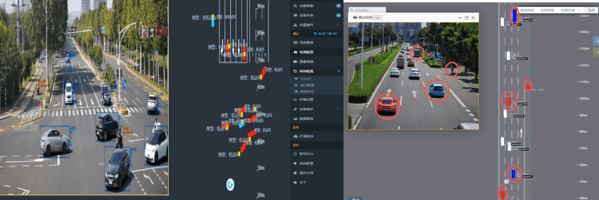
Millimeter-wave radar uses high-frequency scanning to obtain target range, speed, heading angle, and other motion trajectory data, forming continuous tracking data. Meanwhile, high-definition video synchronously captures visual features such as license plate and vehicle type. Through spatial-temporal registration and feature-level fusion algorithms, the two types of data are associated with the same target, establishing a vehicle trajectory with a unique identity. Based on this, the system compares trajectory features against predefined behavior models in real time. When events such as abnormal stop, continuous lane change, or low-speed driving are detected, warnings are generated within milliseconds and reported to the management platform, completing the closed loop of “detection – warning – handling”.
Key Features
-
All-weather reliable sensing – Millimeter-wave radar unaffected by lighting, rain, snow, or fog, compensating for video’s environmental limitations, ensuring 7×24 continuous perception.
-
Lane-level high-precision tracking – Radar provides decimeter-level positioning fused with video lane detection, accurately identifying vehicle position and lane.
-
Multi-modal feature fusion – Radar motion information (position, speed) deeply associates with video semantic information (license plate, vehicle type), forming a complete target profile.
-
Second-level event detection and warning – Real-time comparison of trajectory and behavior models triggers alarms within milliseconds for events such as abnormal stop, continuous lane change, and reverse drive.